
25



BMW iX3 50 xDrive M Sport
489.6 miles
1cc
462.7bhp
4.9s
Remember the ‘Watch the Football!’ sketch from That Mitchell and Webb Look? Future Ludwig shouts his way through a promo for the all-important, must-see matches of the weekend, only to sign off with a reminder that the results will be meaningless because the football never ends and goes on forever.
Well, that’s the car industry too, a constant onslaught of new models or facelifts, arriving out of sync with rivals to continuously give us headlines that shout “Can X dethrone Y?” or “Has Y finally met its match with the Z?”. It’s exhausting for us to incessantly pick a new champion, and no doubt bloody annoying for you as last’s month greatest thing is quickly usurped.
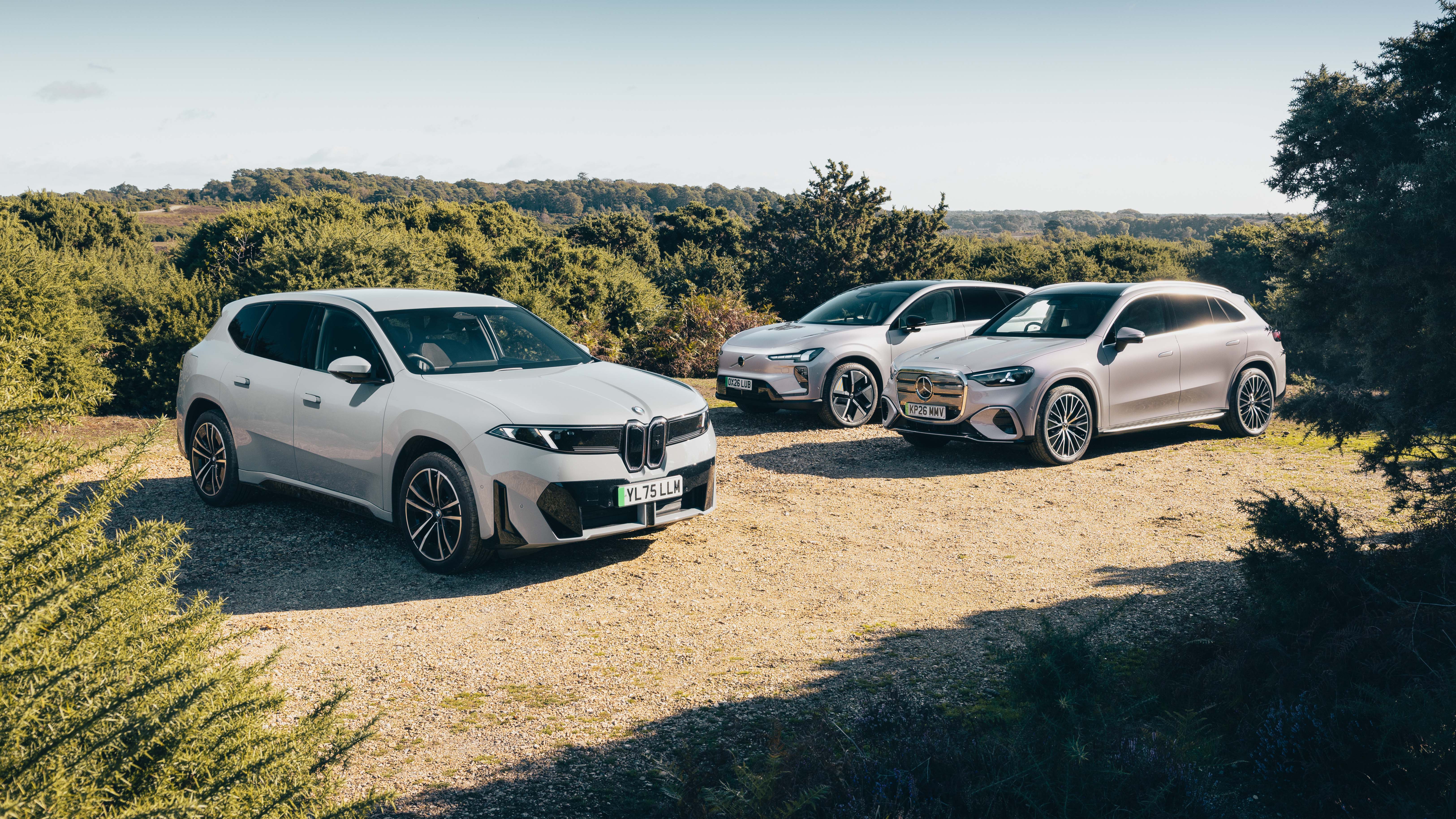
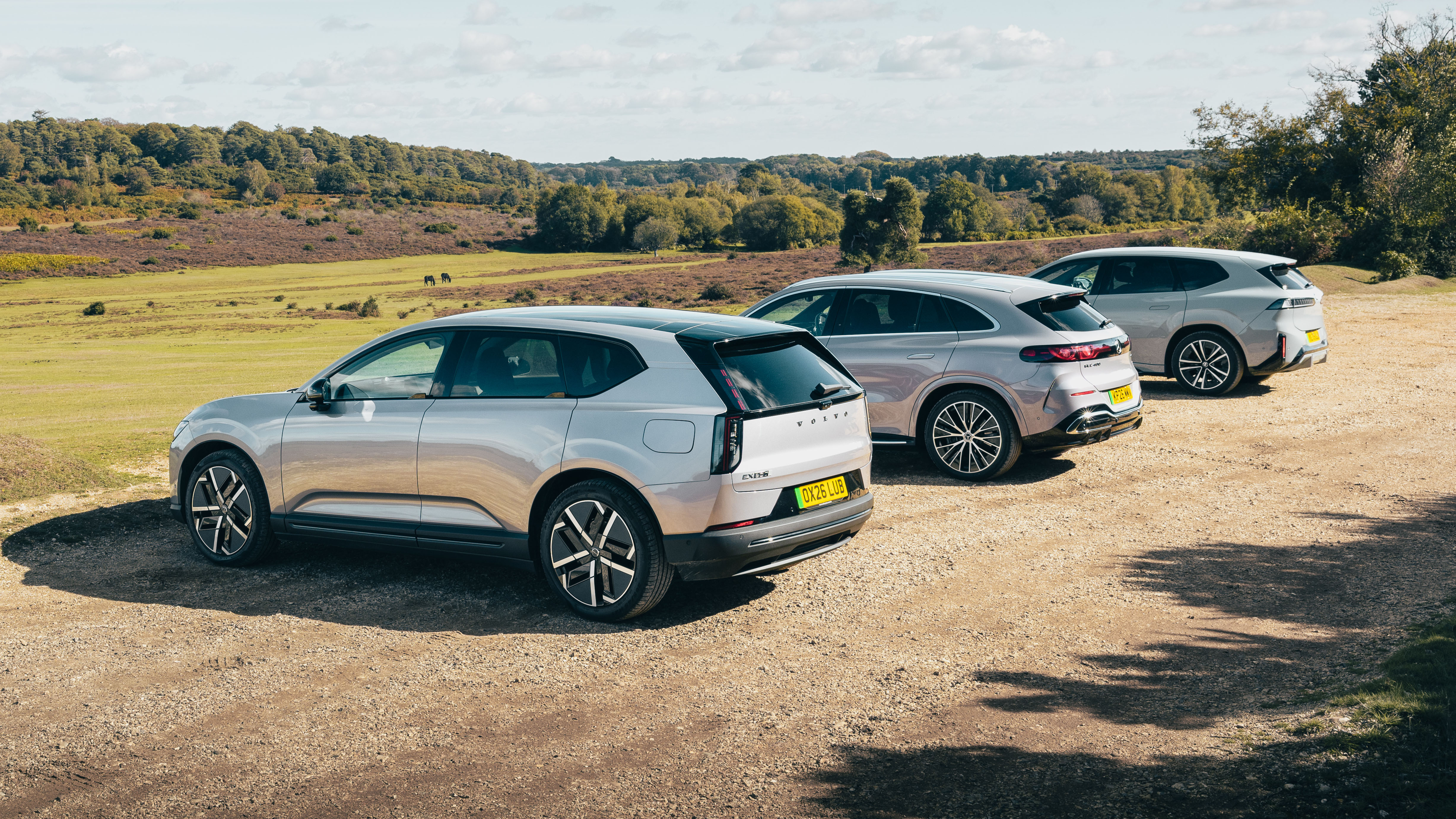
Except… BMW, Mercedes and Volvo have all launched their posh new electric SUVs inside a few months, which means we can do this test and then you’ll be safe in your decision until the next lease runs out. Hurrah for stability.
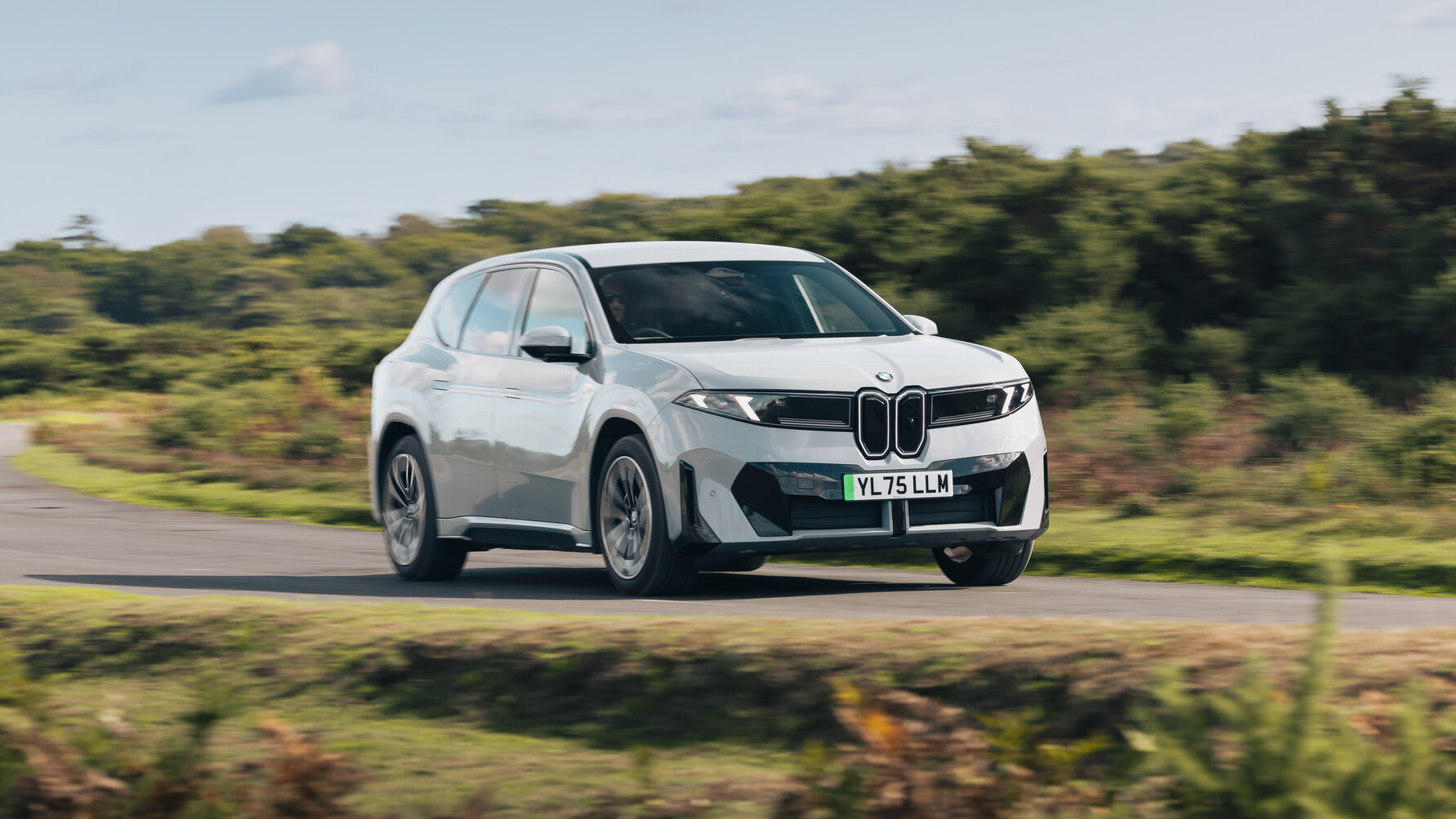
First, some numbers. The iX3 – currently halfway through its time on TG’s Garage fleet – is here in 50 form, which means twin electric motors, 4WD and 463bhp. A whopper of a 108.7kWh battery (usable, and how we’ll state all from here on) is rated at 497 miles. This one is £61,255 in M Sport guise (the middle of three trims) and as tested it’s £65,805. A 40 version has also just gone on sale, with one rear motor, plus an 82.6kWh battery for 395 miles of range.
The EX60 is here in P10 guise, which needs a little explaining. The P10 sits between the forthcoming P6 and P12 models, and they offer 369, 503 and 671bhp respectively. The P6 has a single motor and an 80kWh battery, the others have dual motors and 91kWh and 112kWh batteries, giving ranges of 380, 410 and 503 miles. Ultra trim means niceties like a Bowers & Wilkins stereo, an electrochromic roof, fancy headlights, and a starting price of £65,360 in P10 guise – to which Nappa leather and the pinkish paint take us to £67,845.
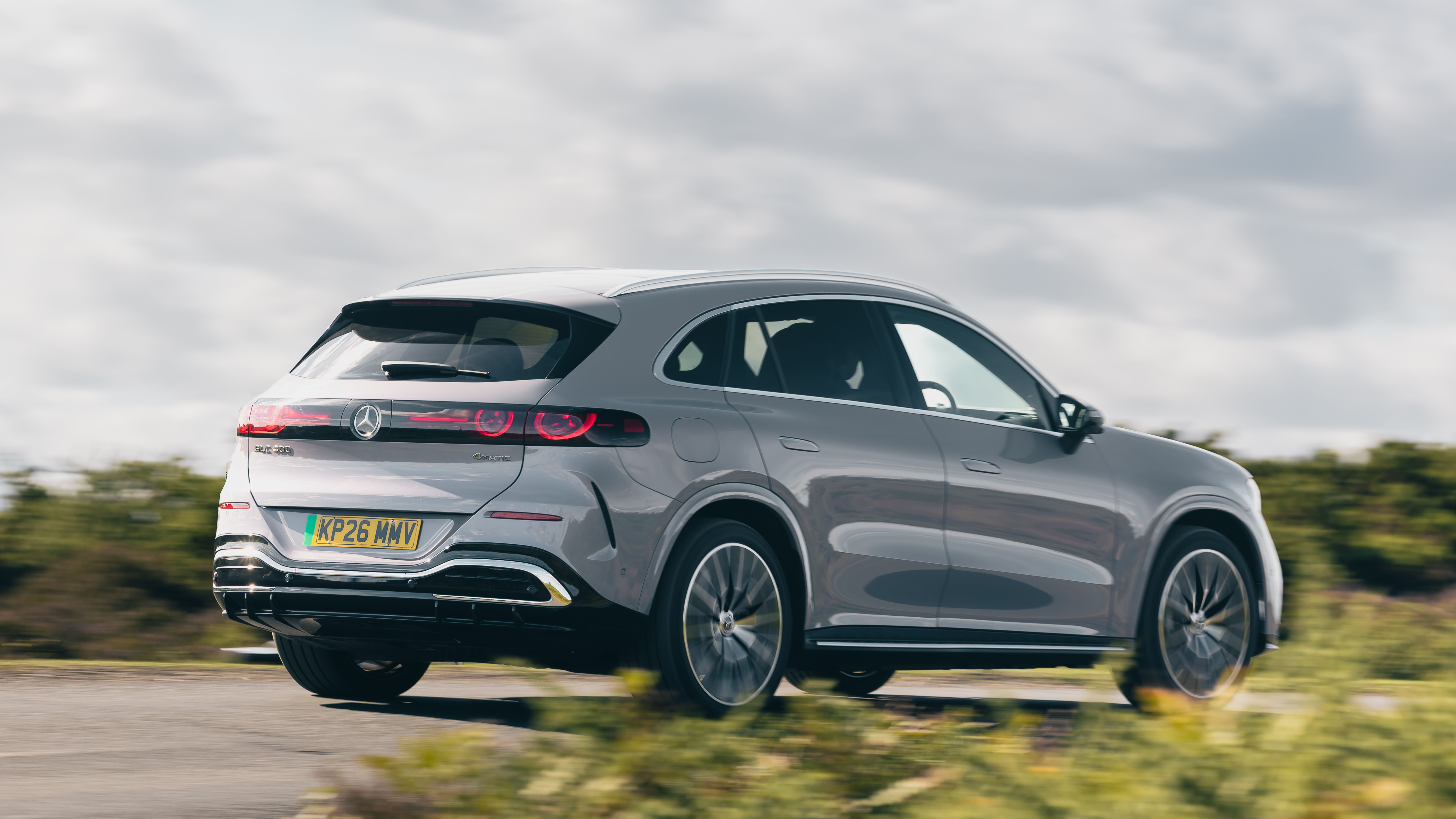
Prices start at £55,495 for the Merc, for the single-motor, 85kWh, 349bhp ‘250’. The ‘400’ tested here has twin motors, 483bhp, a 94kWh battery and is £60,350 – but the first UK press cars are loaded AMG Line Premium Plus spec, which shoots us up to £70,850. To which all the options have been ticked on this car, to add air suspension and rear-wheel steer (£2,500), 22kW AC charging (£1k), running boards (£1k) and trailer coupling (£1k), resulting in a chunky £77,100.
The last three of those four are easily disregarded for this test, and it doesn’t look like nearly £80k on the outside either, what with its lavender paint, gawdy chrome running boards, whatever pixelation pattern gilds that front grille, and the black mask across the rear lights that’s pinched from the AMG GT 4-Door. An ICE GLC looks better.
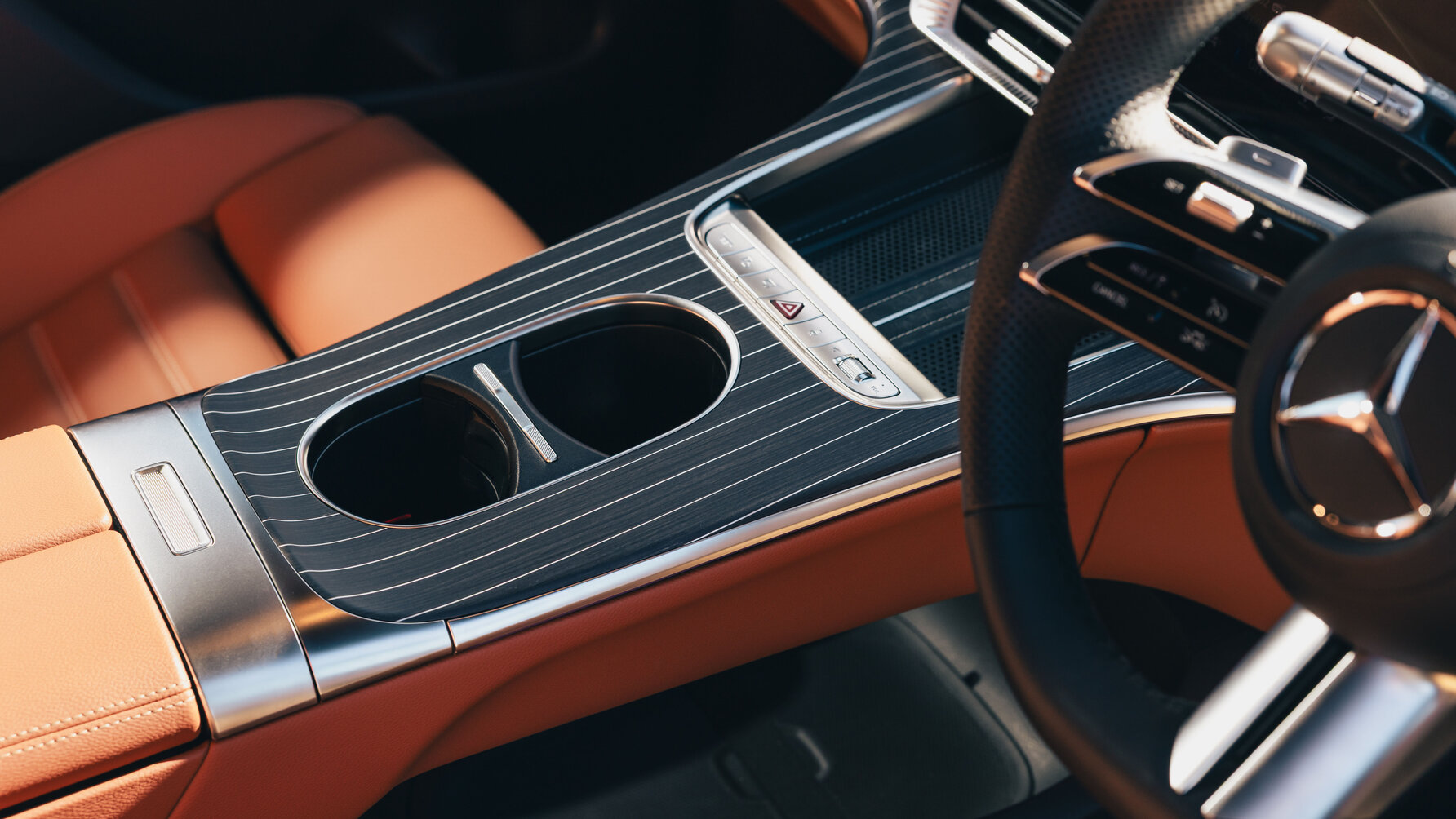
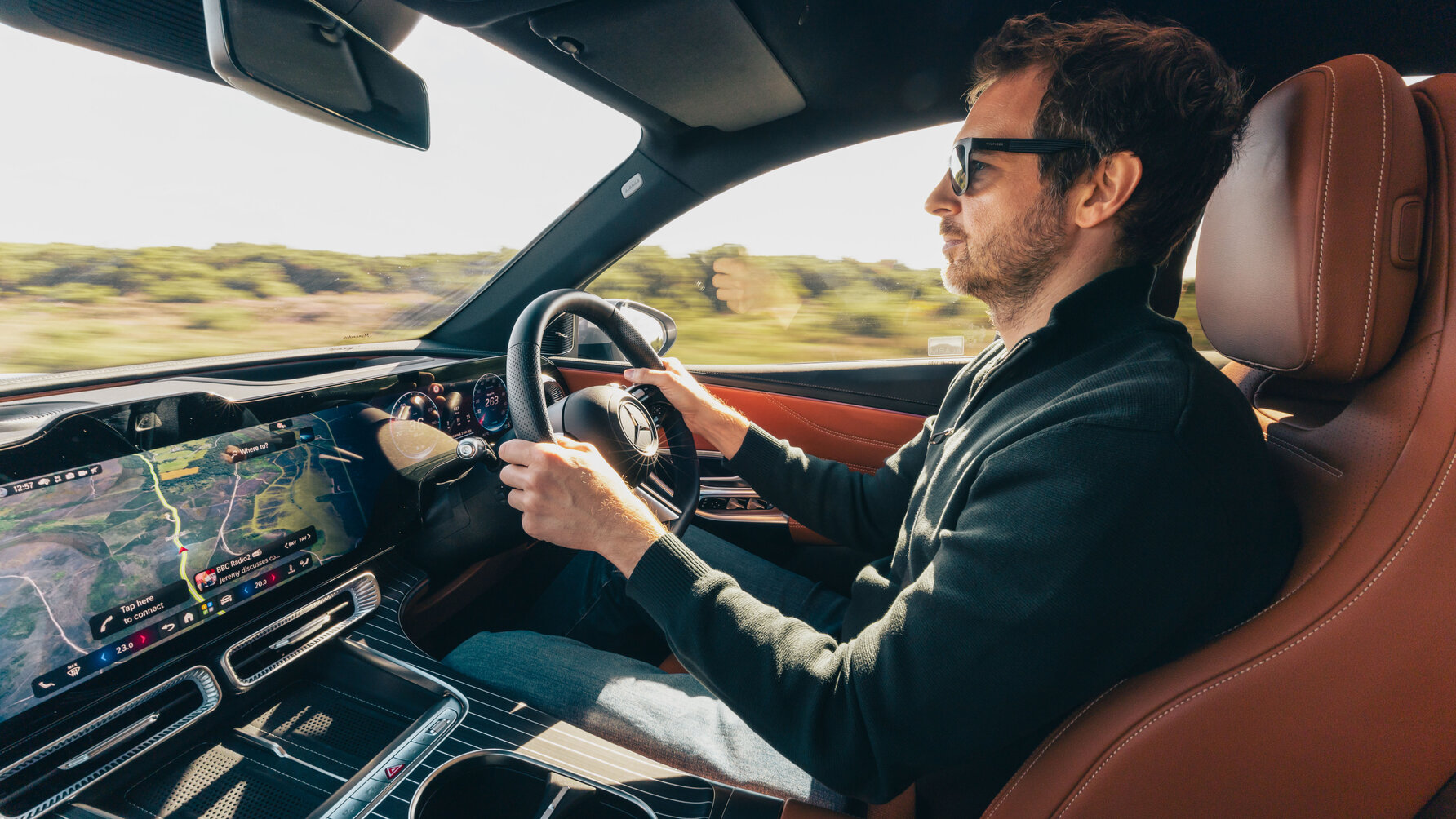
But, but, but, climb inside and it does feel special. The Merc’s tan leather is more appealing than the blackhole BMW, more practical than the kids-please-do-not-touch white leather of the Volvo. And, with the show-stopping 39.1in Hyperscreen, high-set dash that wraps around with ample ambient lighting, lashings of chrome and wood, and a pan roof that floods the cabin with light, it has showroom sparkle.
It’s the most straightforward to use, too. The pop-out door handles are spring-loaded, which is hardly innovative but make the inert handles in the BMW feel (even more) uninviting. The controls on the steering wheel are clear, ditto the column stalks for the wipers and gearbox, and it’s so normal I initially don’t find the interior door handle because it’s right where you’d expect. How quaint.
The digital dials are also clear, the central section of the Hyperscreen impressively good that you needn’t default to Apple CarPlay or Android Auto, and while the third screen facing the passenger is a bit silly, it’s fancier than the empty acreage offered by its two rivals.
You will find faults in time, though: the chrome trim is plastic; the steering wheel controls don’t click with the Merc robustness of old; the curve of the centre console squeezes my left knee; and I can’t unsee a 1980s Wall Street suit in the silver-striped wood.
After the razzmatazz of the Merc, the Volvo is all Scandi sensibility. The exterior looks like the future (if the Merc is the present, and the BMW is the future gone wrong) and I’m not offended by the little fins that are the door handles either.
Inside, it’s love-or-hate. The interior door pull is set further back from the hinge, which makes sense when you reach for it, but then ends up too close as it closes and contorts your arm into an awkward chicken wing. The tiny steering wheel seems to have been lifted from a Peugeot (where it doesn’t work either) and there’s barely any sculpting to help grip the back of it.
And yet, after the drabness of the BMW and the Liberace-ness of the Merc, this is Peak Volvo. Clean, uncluttered, and so minimalist there’s little to describe. If you’re the sort of person who moves house and loves the look when only the sofa and TV are unpacked, this is for you. My wife adores it.
Me, I like pictures on the walls, but as frustrating as adjusting the wing mirrors through the steering wheel is, I get junking the cost to engineer and fit them when they might only be used once in the lifetime of an EX60. But a physical temperature dial, I’d use that daily.
Against them, the BMW feels a bit dark and dull. Which is in part because of the black leather, in part because we picked an iX3 to run without the pricey panoramic roof. Ultimately, it does lack that initial ‘wow’ factor of the others, but fights back with the fab set of screens at the base of the windscreen and the best cabin layout when it comes to places to put stuff. And, whisper it, watching it following through the rear-view mirror, the front suddenly looks very good on the move – I never thought that when it was stationary on my drive.
Strangely though, its trump card is the range, a realistic 400 miles that means you don’t ever fret about charging – but is that really what should stand out? By way of comparison, the Merc is more like 350 miles, and the Volvo 320 miles – though the P12 EX60 will likely match the iX3. If only these manufacturers would give us the biggest batteries matched with single motors.
At this point we should segue to ride and handling, but when we’re talking 2.3-tonne SUVs (and the Merc is closer to 2,600kg…) there’s not much to be found here. All are faster than drivers used to 2.0-litre turbodiesels will ever need, all have lots of grip thanks to big wheels wrapped in modern tyres, and none will ever corner with the alacrity (I’m playing road-tester word bingo) that a 1.7-tonne estate will.
The BMW doesn’t give you enough extra to offset the jiggly ride, the Volvo rides rather well but I wasn’t yet used to the little steering wheel even after our week with it was up, and so the Merc is the leader on the road because the air suspension endows it with a pillowy ride and the rear-steer will tuck it into corners with surprising zip.
Verdict? None of them are perfect: I’d take the Volvo’s design inside and out, with the Merc’s pizazz and ride/handling combo, plus the BMW’s Panoramic iDrive and real-world range. Room for improvement then, but we’ll have to wait three years to do it all over again…
Get all the latest news, reviews and exclusives, direct to your inbox.
